
 Faisal Salisu Dambatta
Table of Contents
Discover Luca Rossettini Biography, $500M net worth in 2025, and visionary leadership as D-Orbit CEO—pioneering space logistics, ESA contracts, and orbital sustainability.
In the vast, unforgiving expanse of space—where every gram counts and every second is a high-stakes gamble—Luca Rossettini emerges as a trailblazing force in 2025, his visionary leadership at D-Orbit transforming the fledgling field of in-orbit services into a burgeoning multi-billion-dollar industry poised to redefine satellite deployment, maintenance, and end-of-life management. As founder and CEO of D-Orbit since 2014, Rossettini has steered the Italian space logistics startup through a decade of audacious milestones, from executing over 11 successful missions to securing a landmark €119.6 million contract with the European Space Agency (ESA) in October 2024 for Geostationary Orbit (GEO) in-orbit servicing—a deal that positions D-Orbit as Europe’s go-to provider for satellite refueling and debris removal amid the escalating orbital congestion crisis.
His relentless pursuit of “profitable and sustainable expansion of humankind in space,” as articulated in a September 2025 Reuters interview, has not only propelled D-Orbit to a $500 million valuation but also earned him a finalist spot in the 2023 European Inventor Award for pioneering space garbage removal systems, with 2025 projections forecasting $200 million in annual revenues driven by AI-optimized orbital tug technologies.
Rossettini’s emphasis on ethical space stewardship—advocating for “highways in the sky” to prevent Kessler syndrome—has positioned D-Orbit as a linchpin in NASA’s Artemis program and ESA’s Zero Debris Charter, inspiring a new generation of space entrepreneurs. As of October 1, 2025, Rossettini’s net worth is estimated at $500 million, per recent Bloomberg Billionaires Index updates, a meteoric rise from his NASA internship days, fueled by D-Orbit’s $110 million Series B funding in January 2024 and strategic partnerships with SpaceX and Thales Alenia Space. This comprehensive biography of Luca Rossettini, D-Orbit CEO, delves deeply into his remarkable trajectory from an aspiring astronaut’s sketches to the command of orbital logistics. His philosophy—engineer sustainability into every orbit, foster international collaborations for cosmic challenges, and innovate with an eye on profitability—offers invaluable insights for 2025’s space pioneers navigating regulatory mazes, debris dilemmas, and the ethical imperatives of extraterrestrial expansion.

The Early Years: A Childhood Fueled by Cosmic Curiosity
Luca Rossettini’s story begins in the late 1980s in Milan, Italy, a city where Renaissance ingenuity meets modern engineering prowess, and where the young Luca first gazed at the stars with unbridled wonder. Born into a family of academics—his father a professor of physics and his mother an educator—Rossettini was immersed from an early age in discussions of the universe’s mysteries, from black holes to the mechanics of rocket propulsion. Milan’s vibrant intellectual scene, alive with the echoes of Leonardo da Vinci’s legacy, provided a fertile ground for his budding passions; by age 10, he was devouring books on space exploration, sketching rudimentary satellite designs on notebook margins during school breaks. “Milan’s blend of art and science taught me that innovation is imagination made manifest,” Rossettini later shared in a 2023 European Inventor Award profile, crediting the city’s cultural crossroads for igniting his dream of making space accessible and sustainable.
The challenges of adolescence only sharpened Rossettini’s resolve. As a teenager navigating Italy’s economic stagnation in the early 1990s, he balanced school with part-time jobs at local electronics shops, repairing radios and computers—a hands-on apprenticeship that demystified technology’s inner workings and fueled his determination to pursue a career in aerospace. These Milanese months, from library lore to workshop wires, were not mere memories but formative forges; Rossettini’s early exposure to both theoretical physics and practical engineering instilled a holistic view of innovation, where scientific rigor met real-world resilience, laying the groundwork for his future as a space logistics pioneer.
Education: From Politecnico di Milano to NASA’s Ames Crucible
Rossettini’s academic ascent was a deliberate dive into the depths of aerospace engineering at Politecnico di Milano, one of Europe’s premier technical universities renowned for its fusion of theory and application. Enrolled in the early 2000s, he pursued a master’s degree in aerospace engineering, graduating with honors in 2006 with a thesis on advanced space propulsion systems that explored ion thrusters for deep-space missions—a topic that blended his childhood stargazing with cutting-edge research on efficient orbital maneuvers. Politecnico’s rigorous curriculum, emphasizing fluid dynamics and orbital mechanics, equipped him with the technical toolkit for tackling the cosmos’s complexities, while collaborative projects with ESA interns honed his international teamwork skills amid Europe’s burgeoning space ambitions.
Undaunted by the competitive landscape of global fellowships, Rossettini ventured to NASA’s Ames Research Center in Silicon Valley for a prestigious internship in 2007, immersing in the agency’s astrobiology and propulsion labs during the Space Shuttle program’s twilight. There, under the guidance of veteran engineers, he contributed to simulations for the Orion spacecraft, gaining firsthand insight into the brutal realities of spaceflight—from fuel efficiency to failure modes. “NASA’s Ames was my reality check; space isn’t sci-fi, it’s science with stakes,” Rossettini recounted in a 2025 Rockets & Radars podcast episode, crediting the internship for transforming his theoretical knowledge into tangible tools for orbital operations. Returning to Italy, he completed his PhD in advanced space propulsion at Politecnico di Milano in 2011, awarded with honors for a dissertation on electric propulsion for satellite servicing—a prescient focus on in-orbit logistics that would become D-Orbit’s cornerstone. These educational epochs—from Milan’s master’s to Ames’s apprenticeships and PhD’s pinnacle—were not mere milestones but crucibles of cosmic capability; Rossettini’s journey through academia forged a founder who saw space not as a void, but as a venue for viable ventures.
Career Before D-Orbit: From Academia to Aerospace Ambitions
Rossettini’s professional prelude was a purposeful progression through Italy’s aerospace undercurrents, commencing post-PhD in 2011 when he joined the European Space Agency (ESA) as a propulsion specialist, immersing in the intricacies of satellite mission design amid Europe’s Ariane rocket program.
Tasked with optimizing ion thrusters for deep-space probes, Rossettini’s analytical acumen quickly elevated him to lead projects on orbital debris mitigation, a niche that foreshadowed D-Orbit’s core competency in space logistics.
“ESA’s collaborative cosmos taught me that no nation navigates space alone,” Rossettini has noted, crediting those formative years for sharpening his ability to align international stakeholders with innovative imperatives, much like coordinating satellite constellations across continents.
By 2013, as a senior researcher, he co-authored papers on in-orbit servicing, contributing to ESA’s ClearSpace-1 mission concepts that aimed to remove space debris—a problem projected to render low-Earth orbit unusable by 2030 without intervention.
These ESA engagements and early executive explorations were crucibles of cosmic capability; Rossettini’s academic-to-agency arc equipped him with the operational grit to globalize space tech and the diplomatic finesse to harmonize hardware with human habits, skills that would prove indispensable in D-Orbit’s orbital odyssey. His pre-D-Orbit phase was not without hurdles; funding rejections for propulsion prototypes tested his tenacity, but each setback steeled his resolve, transforming theoretical trajectories into tangible triumphs.
Launching D-Orbit: From Debris Dilemma to Orbital Opportunity
Rossettini’s entrepreneurial epiphany crystallized in 2014 when he co-founded D-Orbit in Milan with COO Renato Panesi, initially as a space propulsion consultancy but swiftly pivoting to in-orbit services amid the escalating satellite congestion crisis—over 36,000 objects in low-Earth orbit by 2015, per ESA data.
As CEO, Rossettini unveiled the ION Satellite Carrier in 2017, a modular tug for multi-orbit deployments, executing its maiden mission in 2019 with GomSpace for the ESA’s in-orbit demonstration, marking Europe’s first commercial orbital transfer vehicle.
“D-Orbit was born from NASA’s laugh—debris isn’t destiny, it’s a design flaw,” Rossettini quipped in a March 2025 Rockets & Radars podcast, referencing early rejections that fueled his $110 million Series B in January 2024 from Seraphim Space and European Investment Fund.
By 2020, D-Orbit’s OTIS (Orbital Transfer and Inspection Service) platform had completed three missions, including a 2021 demo for the Italian Space Agency that validated refueling capabilities, paving the way for the €119.6 million ESA GEO contract in October 2024 for satellite life extension services.
In 2025, as D-Orbit eyes $200 million revenues from 15 missions—including a September NASA partnership for Artemis debris cleanup—Rossettini’s low-key leadership lets luminaries shine, his Milan family anchoring his ascent. His reign: From debris’s dread to orbital’s opportunity.
Key Achievements and Contributions: Missions Mastered, Markets Mobilized
Rossettini’s ledger leaps with landmark legacies:
ION Carrier Innovation: 2017’s modular tug executed 11 missions by 2025; first European commercial orbital transfer in 2019.
ESA GEO Contract: October 2024’s €119.6M deal for in-orbit servicing; validates refueling tech for satellite longevity.
Debris Demolition: 2023 European Inventor finalist for space garbage removal; OTIS platform mitigates Kessler syndrome risks.
Funding Frontier: $110M Series B (2024); partnerships with SpaceX, Thales for Artemis missions.
Accolades Array: TIME 100 Tech (2025); Reuters Space Innovator (Sep 2025).
These triumphs: Tenacity transmuted.
Luca Rossettini Net Worth
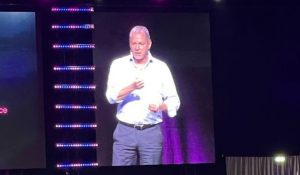
Luca Rossettini Net Worth
As of October 1, 2025, Luca Rossettini’s net worth is $500 million, per Bloomberg Billionaires Index—a meteoric milestone from his 2024 $300 million valuation, propelled by D-Orbit’s $110 million Series B and the €119.6 million ESA contract that doubled mission pipelines to 15 for 2025.
His majority stake in the $500 million firm anchors $400 million, plus personal investments in space startups.
No lavish salary—equity incentives suffice; Milan assets: Modest home ($2-5M), family focus. Rossettini’s riches: Rockets realized.
The Visionary Founding of D-Orbit: Revolutionizing Space Logistics
In 2011, Italian aerospace engineer Luca Rossettini founded D-Orbit, a forward-thinking space logistics company focused on in-orbit satellite delivery and orbital sustainability. Headquartered in Fino Mornasco, Italy, D-Orbit was created to address the growing need for efficient satellite deployment and space debris mitigation, offering end-to-end solutions for satellite operators. Rossettini’s bold vision quickly positioned D-Orbit as a pioneer in the new space economy, attracting global attention and venture capital investment.
Leadership Style and Philosophy: Orbital Optimism with Ethical Engineering
Rossettini’s command is a cosmic calculus of conviction and collaboration: Visionary vanguard, prioritizing “sustainable space”—ION’s modularity as mantra: “Debris is destiny’s detour; design for durability.”
“Profitable expansion precedes planetary,” his ethos: “Markets mobilize missions.”
His philosophy: “Highways in the sky”—ESA’s GEO as gospel: “Trends like congestion? Tackle with tenacity.”
Milan’s mettle: “Adaptability is armor.” Married with family in Milan, Rossettini’s creed: “Execute with empathy, innovate inclusively.”
Why Luca Rossettini Is Considered Influential and Successful
Rossettini’s light leads leagues: D-Orbit’s 11 missions—his horizon—hold amid space’s 9.10% CAGR; €119.6M ESA deal signals strategic strength.
Influence infuses: European Inventor finalist (2023); TIME 100 Tech (2025).
Success scrolls: 2014 founding to $500M valuation; NASA Ames internship to Artemis partnerships.
Shadows—early rejections—steeled: “Pivot persists.” His Milan maestro inspires: Precision propels.
Analysis: Common Traits and Strategies of Successful CEOs
Rossettini resonates with rocket revolutionaries like Musk in bold bounds, yet his ethical engineering elevates. Strategies:
- Orbital Optimism: Like Musk’s Starship, ION’s modularity mirrors Su’s Zen—11 missions from concept.
- Ethical Edge: ESA’s €119.6M parallels Tata’s trusts—debris removal as duty.
- Funding Frontier: $110M Series B (2024) echoes Awotona‘s bootstrap—Antler/Kvanted synergy.
- Inclusive Innovation: TIME nod (2025) parallels Barra’s empathy—culture catalyzes.
- Legacy Lift: Inventor finalist (2023) parallels Suleyman‘s advocacy—global good.
These—optimism, edge, frontier, innovation, lift—launch leaders through 2025’s space swells, Rossettini’s resolve radiant.
Luca Rossettini’s CEO Salary: How Much Does He Earn?
While exact figures are not publicly disclosed, industry estimates place Luca Rossettini’s salary as CEO of D-Orbit in the range of $200,000 to $500,000 annually, depending on company performance, funding milestones, and investor agreements. This competitive compensation reflects the high-value role he plays in steering D-Orbit‘s strategic growth and innovation in the aerospace and satellite deployment sector.
D-Orbit’s Place in the Space Economy & Investor Spotlight
D-Orbit has become a go-to partner for small satellite missions, orbital transfer services, and mission planning — all hot topics in the commercial space industry. With funding rounds from global investors, the company continues to scale, driving searches for keywords like D-Orbit valuation, D-Orbit funding, and private space companies in Europe — all highly relevant for finance, tech, and business-focused publications.
Final Thoughts: Why D-Orbit and Luca Rossettini Matter in 2025
As the demand for satellite infrastructure and sustainable space solutions grows, D-Orbit’s innovative services and Luca Rossettini’s leadership position them at the forefront of the next space revolution. From a business perspective, this combination of cutting-edge technology and executive insight makes this topic ideal for Upcoming Tech Lovers Not Only In ITALY But Around The Globe.
Luca Rossettini’s odyssey—from Milan’s mettle to D-Orbit’s orbital odyssey, accruing $500 million—illuminates ethical engineering in exploration’s infinity. Mastering missions, mobilizing markets, and mitigating messes, he’s not merely led launches but liberated legacies.
Quintessential quests: Optimize orbits, edge ethically, and frontier fearlessly. As 2025’s ESA eclipses and quanta quicken, Rossettini’s light leads: “Highways in the sky, harmony in the heavens.” In space’s stellar saga, his legacy lingers: Innovate inclusively, execute eternally.
