
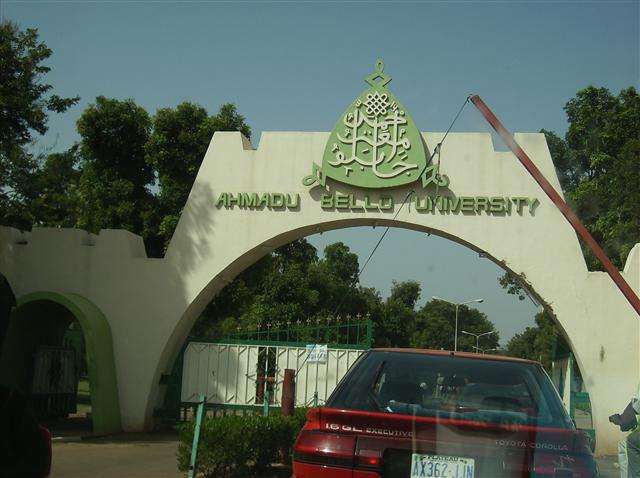
Ahmadu Bello University (ABU), Zaria, has dismissed as false and mischievous a viral video claiming the institution is secretly developing a nuclear weapon for Nigeria.
In a statement issued by its Director of Public Affairs, Auwalu Umar, the university said the video was a deliberate attempt by “unscrupulous elements” to mislead the public and damage the reputation of one of Africa’s leading research institutions.
The video alleged that Nigerian scientists at ABU enriched weapons-grade uranium in the 1980s and built advanced centrifuges from Pakistan’s A.Q. Khan network, claiming they were close to producing a nuclear bomb by 1987.
But ABU described the allegations as “scientifically impossible and historically inaccurate.
“In the 1980s, most scientists at the Centre for Energy Research and Training (CERT), ABU, were still undergoing training abroad and had not even returned to Nigeria,” the statement said. So how could trainee scientists have enriched uranium?
The university explained that neither Nigeria nor ABU has ever had any link with the A.Q. Khan network or any country involved in nuclear weapons development.
It said that by 1987, the only operational facility at the Centre was a 14 MeV neutron generator, which became active in 1988. The country’s main nuclear research project — the Nigeria Research Reactor-1 (NIRR-1) — started in 1996 under the International Atomic Energy Agency (IAEA) Technical Cooperation Programme and was commissioned in 2004.
Umar added that all ABU’s nuclear research has been carried out under strict international supervision and in full compliance with global treaties on non proliferation.
The 34kW NIRR-1 reactor was acquired through a tripartite agreement between Nigeria, China and the IAEA. It initially used highly enriched uranium, which was later converted to low-enriched uranium in 2018 under the Global Threat Reduction Initiative,” he explained.
He said Nigeria remains committed to the peaceful use of nuclear energy, noting that the country signed the Nuclear Non-Proliferation Treaty (NPT) in 1968 and the Pelindaba Treaty in 2009, which bans the development of nuclear weapons in Africa.
Tracing the country’s nuclear history, Umar recalled that national interest in atomic research dates back to 1960, when the Federal Government set up the Federal Radiation Protection Service at the University of Ibadan to monitor radiation effects after France’s atomic tests in the Sahara.
He also noted that the late Premier of Northern Nigeria and founder of ABU, Sir Ahmadu Bello, envisioned nuclear science strictly for peaceful purposes — an idea he pursued after visiting the Oak Ridge National Laboratory in the United States in 1960, before establishing the university in 1962.
ABU’s Centre for Energy Research and Training was founded to fulfil that vision to use nuclear science for national development, not for weapons,he said.
Umar urged the public to disregard the AI-fabricated falsehood” and warned against spreading fake news that could harm Nigeria’s reputation and institutions.