
 Faisal Salisu Dambatta
Gaza City — Partially destroyed buildings across Gaza are increasingly serving as makeshift shelters for Palestinian families who have returned to their homes despite extensive damage caused by prolonged Israeli air strikes.
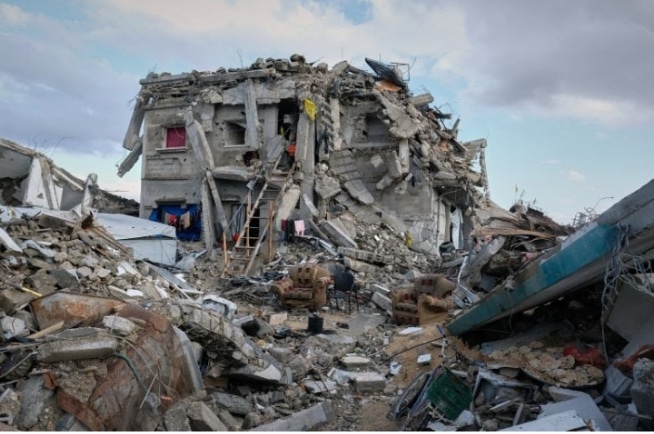
In Gaza City, the Halawa family has taken refuge in their damaged two-storey building, one of the few structures still standing above the rubble after nearly two years of continuous bombardment. Parts of the building have collapsed, with exposed metal rods and unstable concrete, forcing the family to construct narrow wooden steps to access their home.

Israel’s military campaign has killed more than 70,000 Palestinians, destroyed or damaged over 70 per cent of buildings in Gaza, and displaced most of the enclave’s estimated 2.3 million residents. Although a ceasefire agreement was reached in October, Israeli attacks have reportedly continued, resulting in more than 400 additional deaths and further restrictions on humanitarian aid.
Reconstruction efforts have yet to begin and are expected to take years due to continued Israeli control over goods entering and leaving Gaza. As a result, many displaced families are returning to damaged homes rather than remaining in overcrowded and flood-prone tent camps.
The Halawa family, consisting of seven members, fled their home three months after the war began on October 7, 2023, but returned during a brief lull in fighting. Inside their damaged residence, they have carried out basic repairs using concrete fragments and salvaged materials to make the space livable.
Across Gaza City, similar scenes are common.
Families continue daily activities inside structurally unsafe apartments, often sleeping in fear that weakened walls or ceilings may collapse. Health officials say at least 11 people died in a single week in December as a result of building collapses linked to war damage.
In other neighbourhoods, residents sweep dust from carpets laid over debris, children watch movies beside shattered walls, and personal belongings and family photographs are displayed amid cracked concrete and exposed balconies overlooking devastated communities.
Despite the risks, many residents say returning to damaged homes offers more dignity and protection from the elements than life in temporary shelters, highlighting the deep humanitarian crisis facing Gaza as rebuilding remains stalled.
