


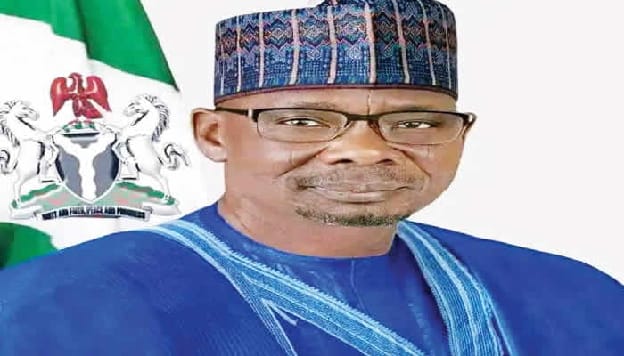
the theme: “Building Nigeria’s Future: The Strategic Role of DFIs and Capital Markets in Infrastructure Financing and Economic Development.”
Drawing from his experience as former Group Managing Director of Dangote Refinery, Sule said the high level of investor interest in the private sector was evidence that substantial capital was available within Nigeria.
“Nigeria has so much money. The easiest way to know is to look at the Dangote Refinery.
“If they decide to sell 30 per cent of a 20-billion-dollar enterprise to the capital market, that six billion dollars will be oversubscribed at least three times by PENCOM, banks and hedge funds,” he said.
According to him, investors are primarily concerned about return on investment, transparency and trust, rather than the physical assets themselves.
Sule said his administration had applied this principle in Nasarawa, transforming the state from a predominantly civil service economy into an emerging industrial hub.
He said an executive order mandating solid mineral firms to process raw materials within the state had attracted some of Africa’s largest lithium processing plants.
”Our Internally Generated Revenue rose from N7 billion annually in 2019 to about N36 billion today.
“We did not take foreign loans because of the associated foreign exchange risks. Instead, we blocked leakages and built roads that opened up mining and agricultural corridors,” he said.
Earlier, the Convener of the dialogue and Managing Partner of Deutsche Partners Holdings, Dr Onuoha Nnachi, said a 2024 assessment put Nigeria’s infrastructure deficit at 30.1 trillion dollars.
Nnachi said 62 per cent of the deficit was in economic infrastructure, which could be financed by the private sector because such projects were commercially viable.
“Budgetary provisions of the federal and state governments cannot fund this gap.
“We must allow government to focus on social infrastructure such as schools and hospitals, while the private sector drives economic infrastructure,” he said.
He commended Nasarawa as one of the few states to establish its infrastructure fund through legislation, with a dedicated portion of state revenue committed to long-term development.
In his remarks, the Chairman of the occasion and Governor of Taraba State, Agbu Kefas, described infrastructure as the foundation upon which economic and social life is built.
Kefas called for a shift from dependence on sovereign budgets to blended finance and green bonds to help meet Africa’s estimated 100-billion-dollar annual infrastructure financing gap.
He was represented by the Commissioner for Agriculture, Prof. Nicholas Namessan.
Also speaking, the Inspector-General of Police, Olatunji Disu, represented by CP Justin Obiora, said sustainable development could not thrive in an atmosphere of insecurity.
He said the Nigeria Police Force was adopting technology-driven policing, including advanced surveillance along critical corridors, to safeguard infrastructure from vandalism and sabotage.
The 2026 Infrastructure Dialogue brought together policymakers, development finance institutions and private sector leaders to explore ways of aligning capital with Nigeria’s development priorities.
punch News the theme: “Building Nigeria’s Future: The Strategic Role of DFIs and Capital Markets in Infrastructure Financing and Economic Development.”
Drawing from his experience as former Group Managing Director of Dangote Refinery, Sule said the high level of investor interest in the private sector was evidence that substantial capital was available within Nigeria.
“Nigeria has so much money. The easiest way to know is to look at the Dangote Refinery.
“If they decide to sell 30 per cent of a 20-billion-dollar enterprise to the capital market, that six billion dollars will be oversubscribed at least three times by PENCOM, banks and hedge funds,” he said.
According to him, investors are primarily concerned about return on investment, transparency and trust, rather than the physical assets themselves.
Sule said his administration had applied this principle in Nasarawa, transforming the state from a predominantly civil service economy into an emerging industrial hub.
He said an executive order mandating solid mineral firms to process raw materials within the state had attracted some of Africa’s largest lithium processing plants.
”Our Internally Generated Revenue rose from N7 billion annually in 2019 to about N36 billion today.
“We did not take foreign loans because of the associated foreign exchange risks. Instead, we blocked leakages and built roads that opened up mining and agricultural corridors,” he said.
Earlier, the Convener of the dialogue and Managing Partner of Deutsche Partners Holdings, Dr Onuoha Nnachi, said a 2024 assessment put Nigeria’s infrastructure deficit at 30.1 trillion dollars.
Nnachi said 62 per cent of the deficit was in economic infrastructure, which could be financed by the private sector because such projects were commercially viable.
“Budgetary provisions of the federal and state governments cannot fund this gap.
“We must allow government to focus on social infrastructure such as schools and hospitals, while the private sector drives economic infrastructure,” he said.
He commended Nasarawa as one of the few states to establish its infrastructure fund through legislation, with a dedicated portion of state revenue committed to long-term development.
In his remarks, the Chairman of the occasion and Governor of Taraba State, Agbu Kefas, described infrastructure as the foundation upon which economic and social life is built.
Kefas called for a shift from dependence on sovereign budgets to blended finance and green bonds to help meet Africa’s estimated 100-billion-dollar annual infrastructure financing gap.
He was represented by the Commissioner for Agriculture, Prof. Nicholas Namessan.
Also speaking, the Inspector-General of Police, Olatunji Disu, represented by CP Justin Obiora, said sustainable development could not thrive in an atmosphere of insecurity.
He said the Nigeria Police Force was adopting technology-driven policing, including advanced surveillance along critical corridors, to safeguard infrastructure from vandalism and sabotage.
The 2026 Infrastructure Dialogue brought together policymakers, development finance institutions and private sector leaders to explore ways of aligning capital with Nigeria’s development priorities.