

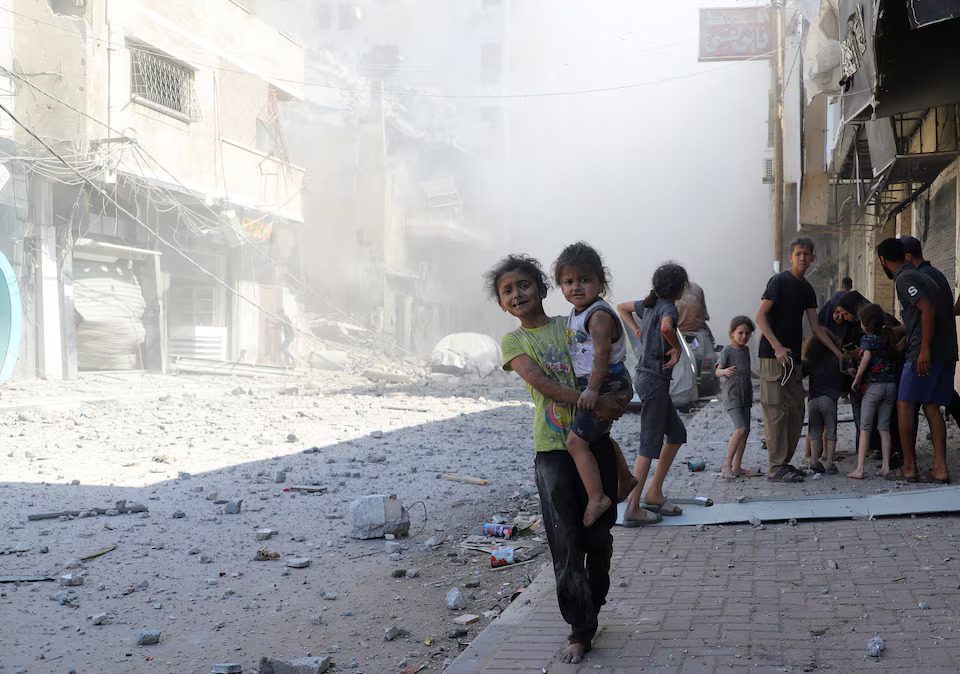
On Monday, the White House unveiled a comprehensive peace plan aimed at bringing an end to the ongoing conflict in Gaza, which has been marked by significant violence and humanitarian crises.
This plan includes some unexpected roles for two well-known political figures: former UK Prime Minister Tony Blair and former U.S. President Donald Trump, both of whom have had their share of controversies in international politics.
WHAT DOES THE PLAN SAY ON INTERIM GOVERNANCE?

The proposal outlines that “Gaza will be governed under the temporary transitional governance of a technocratic, apolitical Palestinian committee.” However, it notably refrains from naming any specific Palestinian individuals or groups that would be involved in this transitional governance structure. This lack of specificity has raised questions about the feasibility and legitimacy of the proposed governance.
The governance panel would operate under the supervision of a newly established international transitional body referred to as the “Board of Peace.” This board is set to be headed by Donald Trump, and it will include other heads of state and notable members, including Tony Blair. The committee’s primary responsibility would be to manage the day-to-day operations of public services and municipalities within Gaza. It is expected to consist of “qualified Palestinians and international experts,” although the proposal does not identify who these individuals might be. Importantly, the plan explicitly states that Hamas, the militant group that has been in control of Gaza, would not have any role in the governance of the territory.
WHY HAS THE PLAN RAISED SOME EYEBROWS?
The inclusion of Tony Blair in this peace plan has sparked considerable debate and skepticism among various advocacy groups and observers. In recent weeks, reports of Blair’s involvement have raised eyebrows, particularly due to the historical context of British imperialism in the region. Blair’s legacy is further complicated by his role in the invasion of Iraq, which was justified by claims that Iraq possessed weapons of mass destruction—claims that were later proven to be unfounded.
The U.S.-led invasion of Iraq commenced in 2003, and the withdrawal of troops occurred in 2011. This military intervention has been widely criticized for its destabilizing effects on the Middle East and the heavy toll it took on civilian lives. Blair himself has faced significant backlash for his assertions regarding weapons of mass destruction, which have since been discredited. Given this history, many are questioning the appropriateness of his involvement in a peace plan for Gaza.
WHAT WILL THE GOVERNANCE BODY DO?
According to the proposal, the governance body will be tasked with managing the funding necessary for the redevelopment of Gaza. This will continue until the Palestinian Authority has successfully completed its reform program, although the plan does not provide a specific timeline for when this might occur. The proposal mentions that some investment ideas and proposals have been developed by international groups, but these groups are not identified in the document.
The Palestinian Authority, along with a joint statement from multiple Muslim-majority countries, has expressed support for Trump’s efforts to bring an end to the war in Gaza. This endorsement indicates a level of international interest in the proposed governance structure, although the actual implementation remains to be seen.
WHAT RECENT ENGAGEMENT HAS BLAIR HAD ON GAZA?
In late September, Tony Blair made a visit to the White House to meet with Donald Trump, signaling a potential collaboration on the issue of Gaza. The Tony Blair Institute, a think tank founded by Blair, has stated that it has engaged in numerous discussions with various groups regarding the post-war reconstruction of Gaza. This involvement suggests that Blair is actively seeking to play a role in shaping the future of the region, despite the mixed reactions to his past actions.
WHAT DO CRITICS AND PALESTINIANS SAY ABOUT BLAIR’S INVOLVEMENT?
Critics of Blair’s involvement have been vocal about their concerns. Mustafa Barghouti, the general secretary of the Palestinian National Initiative, expressed his discontent in an interview with the Washington Post. He stated, “We’ve been under British colonialism already. He has a negative reputation here. If you mention Tony Blair, the first thing people mention is the Iraq war.” This sentiment reflects a broader skepticism among Palestinians regarding foreign intervention in their governance, particularly from figures associated with controversial military actions.
Francesca Albanese, who serves as the United Nations’ special rapporteur on human rights in the occupied Palestinian territories, also weighed in on the matter. She stated emphatically, “Tony Blair? Hell no. Hands off Palestine.” Her strong words underscore the resistance to Blair’s involvement and highlight the desire for Palestinian self-determination without the influence of figures who have been involved in past conflicts.
WHAT DID BLAIR SAY?
In response to the criticism and the unfolding situation, Blair released a statement on Monday in which he characterized Trump’s proposal as a “bold and intelligent plan.” He expressed his support for Trump’s initiative to lead the board that would oversee the panel responsible for Gaza’s interim governance. Blair’s endorsement of the plan indicates his willingness to engage in the peace process, despite the contentious history that surrounds his political career.
In conclusion, the peace plan proposed by the White House represents a significant attempt to address the ongoing conflict in Gaza, but it is not without its challenges and controversies. The roles of Tony Blair and Donald Trump in this plan have sparked debate, raising questions about the effectiveness and legitimacy of foreign involvement in Palestinian governance. As the situation continues to evolve, the reactions from both Palestinian leaders and international observers will play a crucial role in shaping the future of Gaza and its governance.